Publications论文成果
Medical Imaging · 3D-DSA
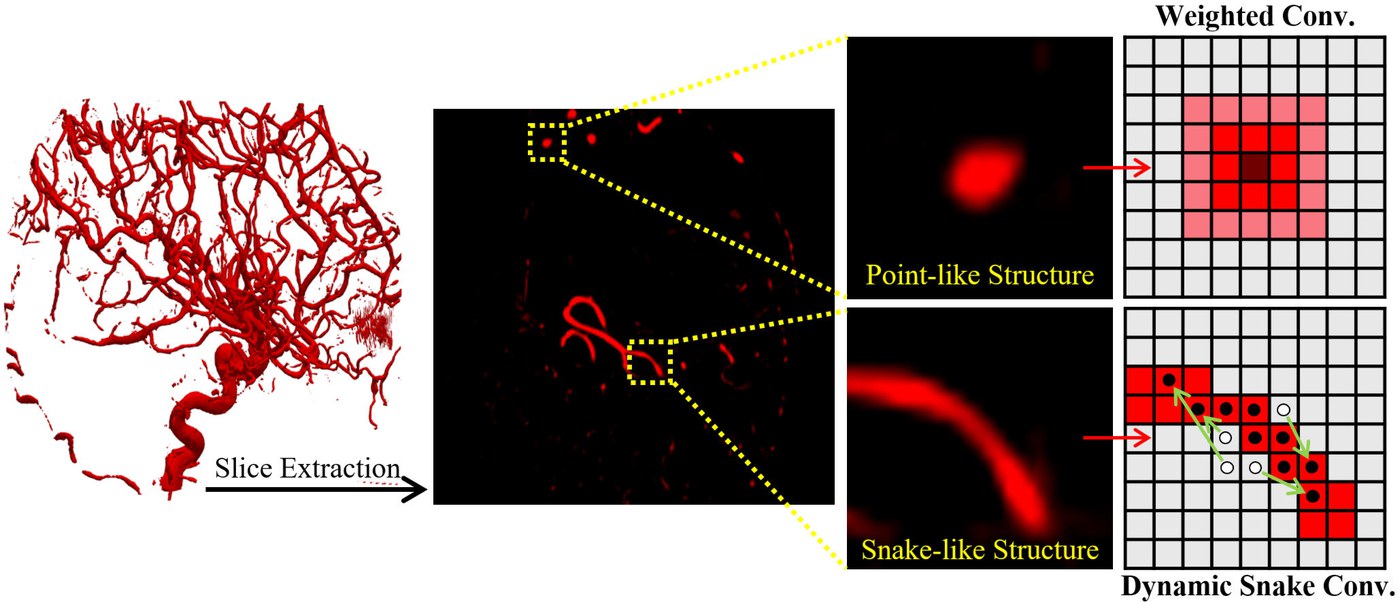
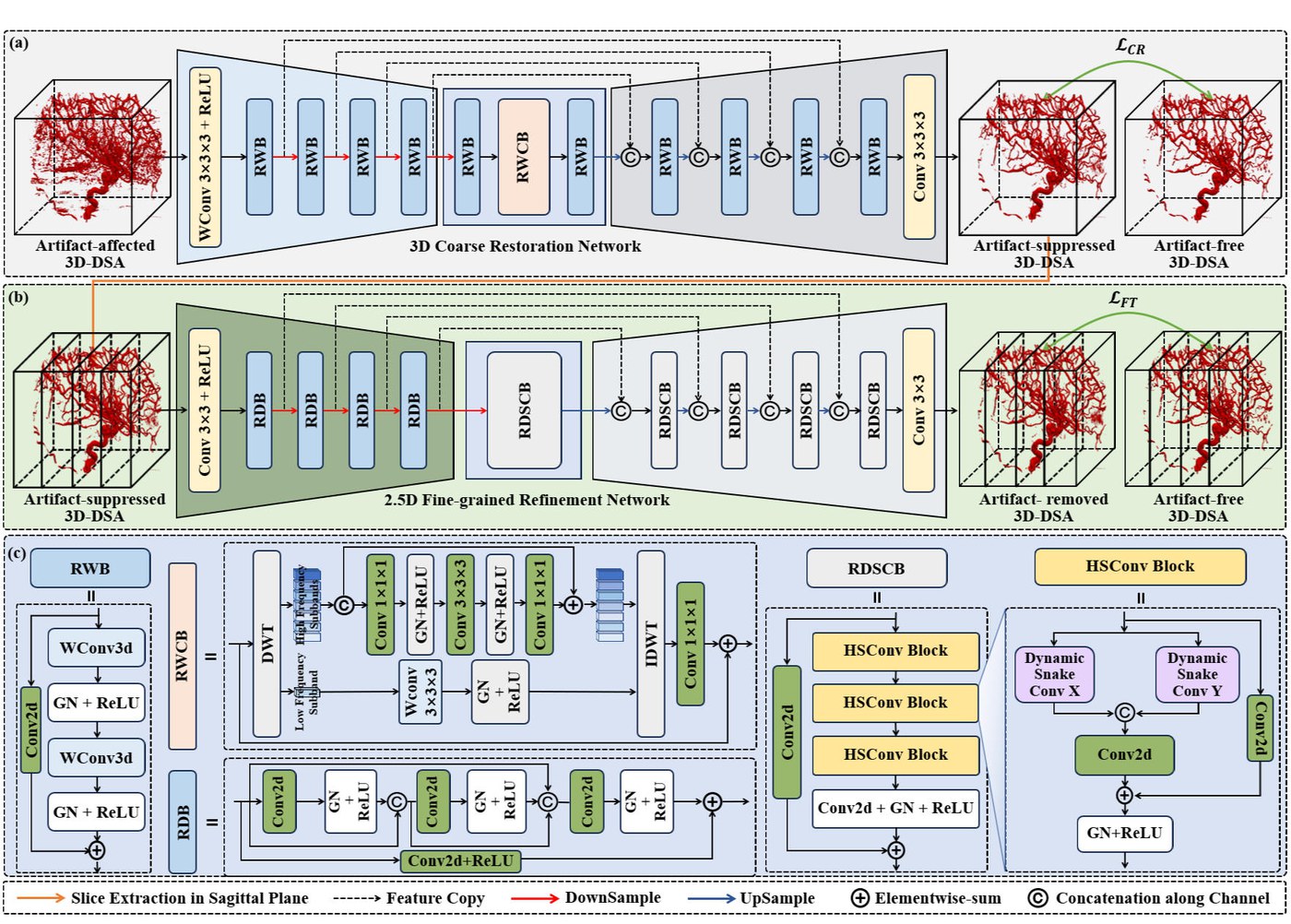
Vascular Morphology Motivated Progressive Structure-Enhanced Restoration for Sparse-view 3D-DSA
IEEE Journal of Biomedical and Health Informatics (JCR Q1 / 中科院一区), minor revision
A progressive structure-enhanced restoration framework for sparse-view 3D-DSA that combines coarse 3D restoration and fine 2.5D refinement to suppress artifacts and recover vascular continuity.
Show details展开详情
This work targets severe streak artifacts and vascular structure degradation in sparse-view 3D-DSA. The framework first performs coarse 3D restoration with weighted convolution and wavelet-domain enhancement, then applies a 2.5D refinement network with dynamic snake convolution to better preserve tortuous vascular structures and fine vessel continuity.
Medical Imaging · DSA
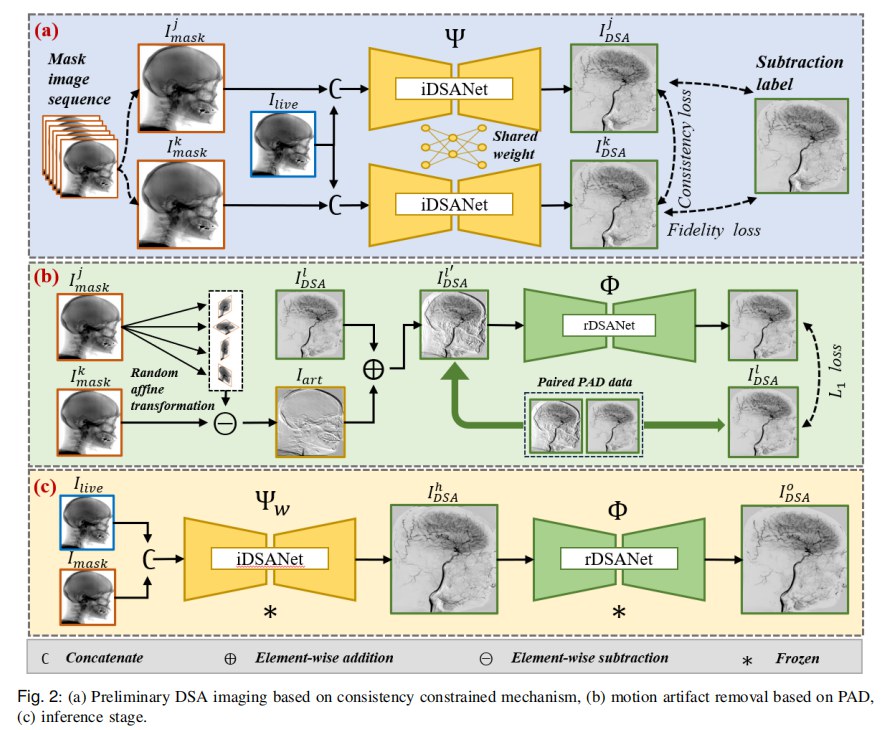
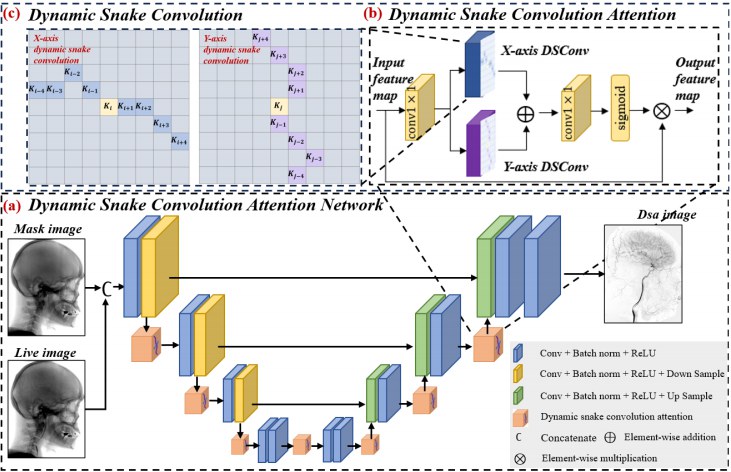
DSANet: Dynamic Snake Convolution Attention Network for Coarse-to-Fine DSA Imaging using Pseudo Aligned Dataset
IEEE Journal of Biomedical and Health Informatics (JCR Q1 / 中科院一区), under review
A coarse-to-fine DSA imaging network that uses pseudo aligned data and dynamic snake convolution attention to suppress motion artifacts while preserving vascular structure.
JCR Q1 / 中科院一区
Under Review
Second Author
Show details展开详情
DSANet addresses motion artifacts caused by misalignment between mask and live images in DSA imaging. It uses a coarse-to-fine pipeline: an initial DSA imaging stage generates preliminary vessel images, and a pseudo aligned dataset is then constructed to train a dynamic snake convolution attention network for artifact suppression and vessel detail preservation.
Medical Imaging · Sparse-view Reconstruction
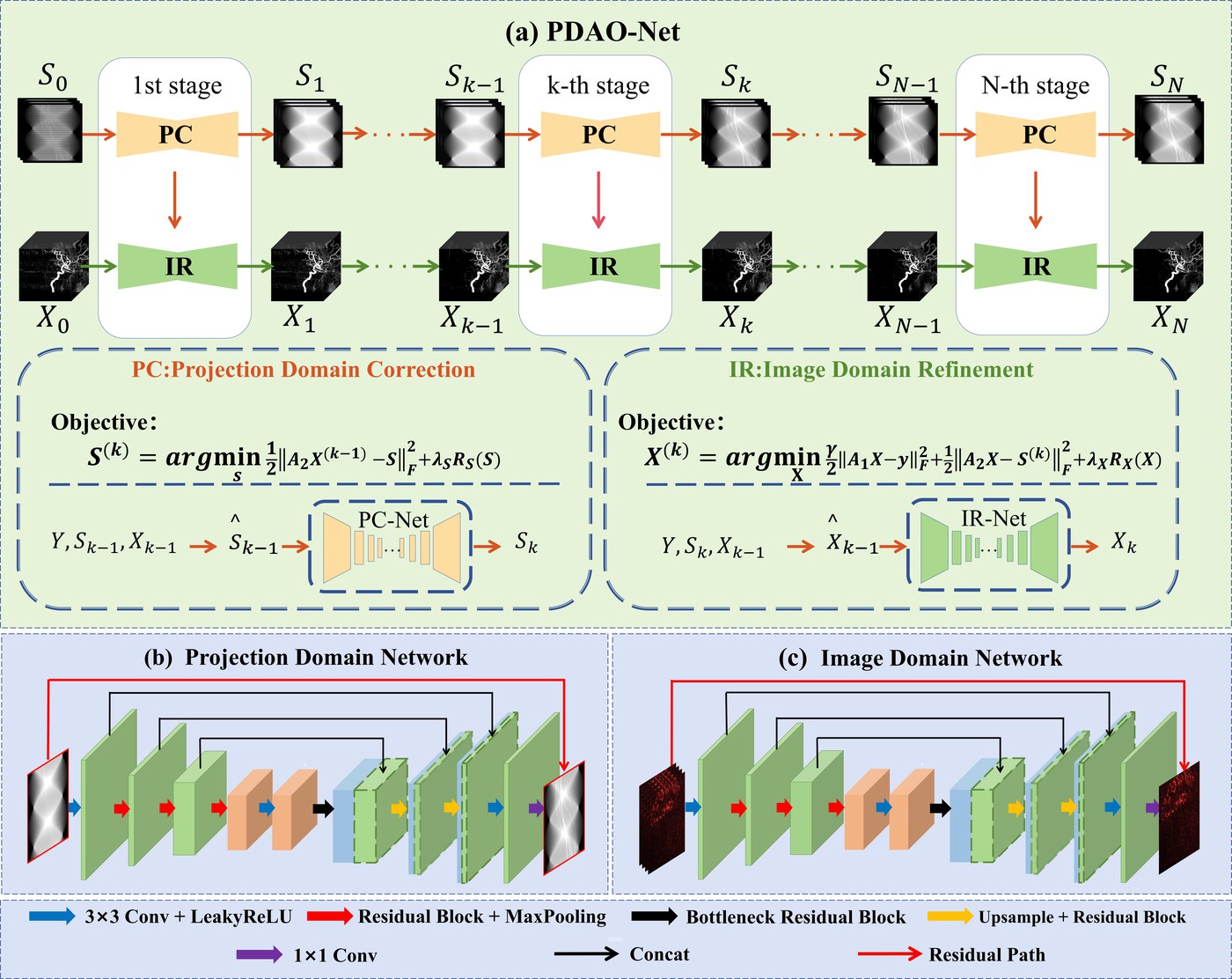
PDAO-Net: A Physics-Constrained Dual-Domain Alternating Optimization Network for Sparse-View 3D-DSA Reconstruction
International Conference on Neural Information Processing (ICONIP), 2026 (CCF C), accepted
A physics-constrained dual-domain reconstruction framework that alternates between projection-domain correction and image-domain refinement for sparse-view 3D-DSA reconstruction.
CCF C
Accepted
First Author
Show details展开详情
PDAO-Net formulates sparse-view 3D-DSA reconstruction as a dual-domain alternating optimization process. It combines projection-domain correction, image-domain refinement, and measured-view replacement to enforce physical consistency while recovering small vascular branches and maintaining vessel continuity under incomplete angular sampling.
Semantic Segmentation · Mamba
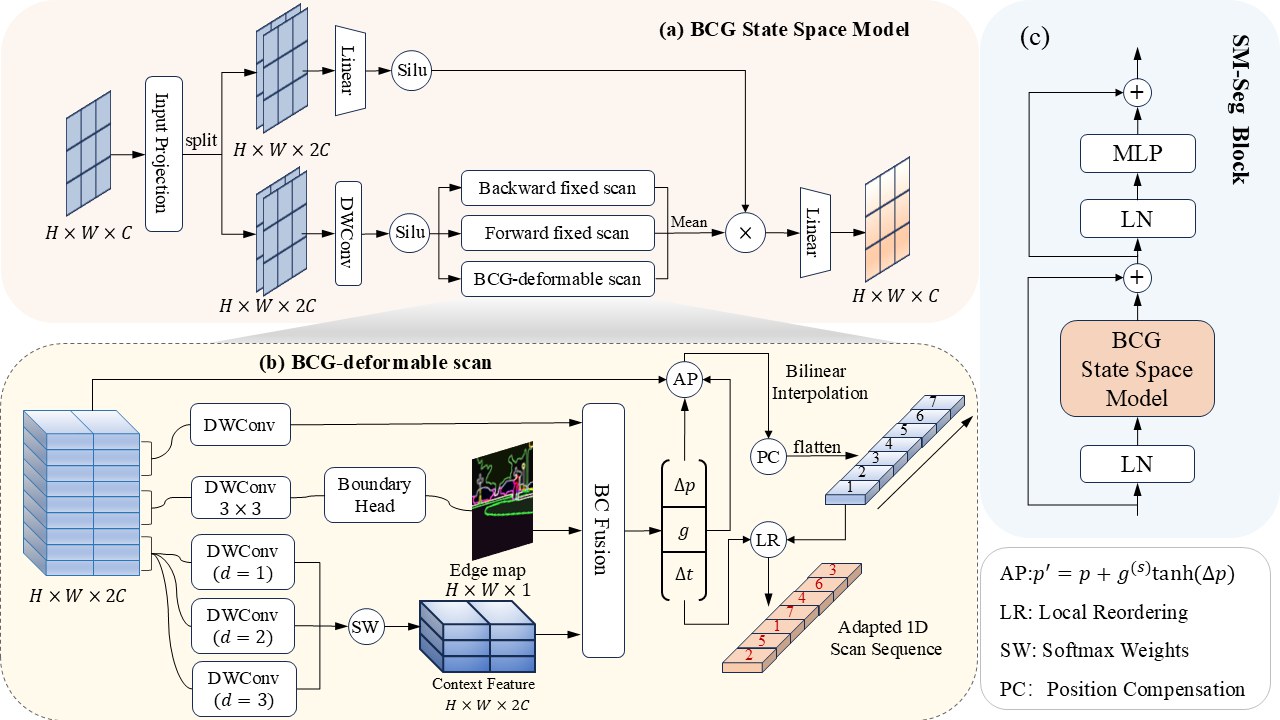
StructMamba-Seg: Boundary-Context Guided Deformable Scan for Semantic Segmentation
International Conference on Neural Information Processing (ICONIP), 2026 (CCF C), accepted
A structure-sensitive Mamba model for semantic segmentation that adapts scan control to boundaries, small objects, fine structures, and ambiguous regions.
CCF C
Accepted
Fourth Author
Show details展开详情
StructMamba-Seg introduces Boundary-Context Guided Deformable Scan into a Mamba-based segmentation framework. The method uses local features, boundary prompts, and multi-scale context to adapt scan positions and ordering to segmentation-specific structures such as boundaries, small objects, thin regions, and ambiguous areas.
Remote Sensing · Low-light Enhancement
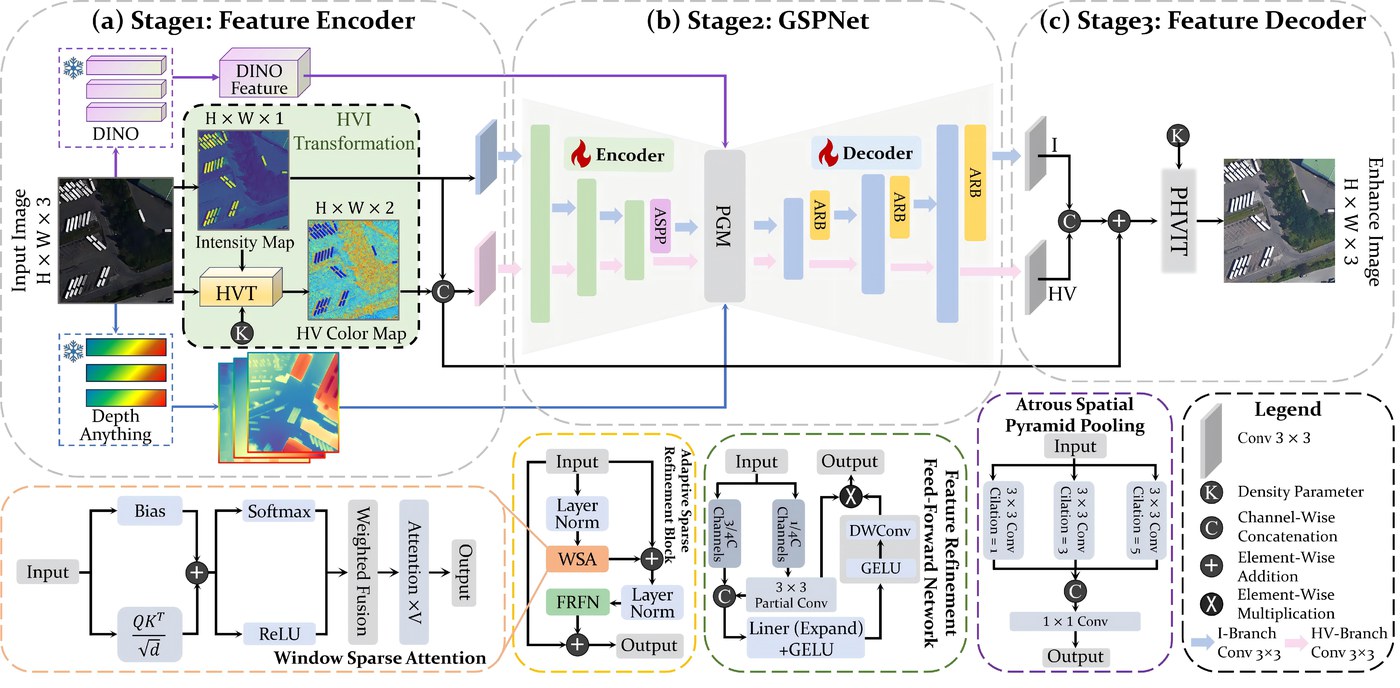
Towards High-quality Low-Light Remote Sensing Image Enhancement via Geometric and Semantic Prior Guidance
International Conference on Neural Information Processing (ICONIP), 2026 (CCF C), accepted
A low-light remote sensing image enhancement framework that introduces geometric and semantic priors to improve high-quality restoration under weak illumination.
CCF C
Accepted
Third Author
Show details展开详情
This work focuses on low-light remote sensing image enhancement, where weak illumination and sensor noise can damage both radiometry and semantic structure. The method introduces geometric and semantic priors to guide restoration, aiming to recover visually faithful images while preserving land-cover boundaries and high-level scene information.